
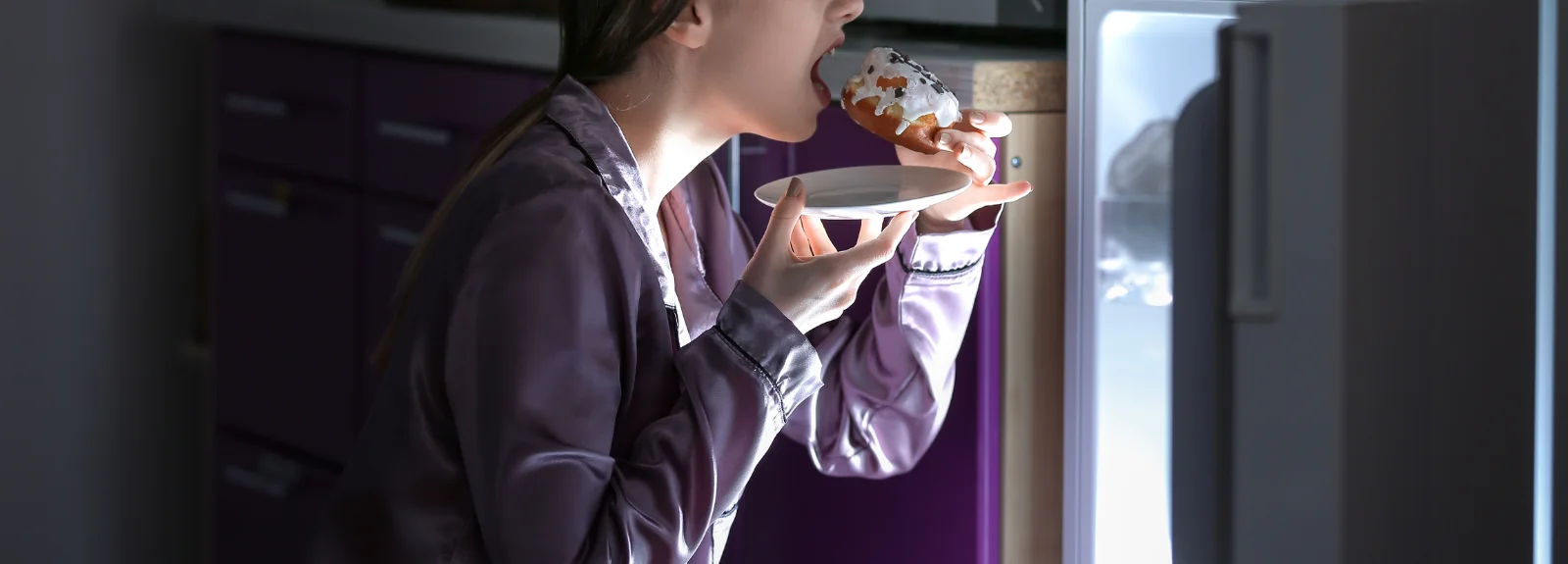
You brush your teeth before bed, avoid too many sweets during the day, and try to maintain good oral hygiene. But there’s one habit many people overlook: late-night snacking.
Whether it’s a quick bowl of cereal, a packet of chips, chocolate while watching Netflix, or a late-night food delivery, eating before bed can have a bigger impact on your oral health than you might think.
In Dubai’s fast-paced lifestyle, late dinners and nighttime snacking are common. But what happens to your teeth when you eat right before sleeping?
Is Eating Before Bed Bad for Your Teeth?
Yes. Eating before bed can increase the risk of tooth decay, bad breath, and plaque buildup.
When you sleep, your mouth produces less saliva. Since saliva helps wash away food particles and neutralize harmful acids, reduced saliva means bacteria can remain active for longer periods and attack your teeth more easily.
Why Is Late-Night Snacking Worse Than Snacking During the Day?
During the day, saliva continuously helps protect your teeth.
At night:
- Saliva production decreases
- Food particles stay on teeth longer
- Bacteria multiply more easily
- Acids remain in contact with enamel for longer periods
This combination creates an ideal environment for cavities and other dental problems.
Can Late-Night Snacking Cause Cavities?
Yes.
When bacteria in your mouth feed on sugars and carbohydrates from food, they produce acids that weaken tooth enamel.
If this process happens repeatedly, small areas of damage can develop into cavities, which may eventually require professional treatment if left untreated.
People who regularly snack before bed often expose their teeth to these acid attacks for several hours while sleeping.
What Foods Are the Worst for Your Teeth at Night?
Some foods are more harmful than others.
Common examples include:
- Chocolate and sweets
- Cookies and cakes
- Potato chips
- Crackers
- Sugary cereals
- Soft drinks
- Energy drinks
- Sweetened coffee
- Sticky foods such as dried fruits and caramel
These foods either contain high amounts of sugar, starch, or acids that can contribute to tooth decay.
Can Late-Night Snacking Cause Bad Breath?
Yes.
Food particles left in the mouth overnight allow bacteria to grow and release unpleasant-smelling compounds.
This is one reason many people experience strong morning breath after eating late and skipping proper oral hygiene.
Why Do Some People Get Cavities Even If They Brush Twice a Day?
Brushing twice daily is important, but maintaining proper oral hygiene involves more than brushing alone and doesn’t completely eliminate risk.
You may still develop cavities if you:
- Snack after brushing
- Frequently consume sugary foods
- Have a dry mouth
- Skip flossing
- Delay regular dental checkups
Oral health is influenced by both hygiene habits and dietary choices.
What Happens to Your Teeth While You Sleep?
While sleeping, your teeth are less protected than during the day.
Reduced saliva allows:
- More bacterial activity
- Increased acid production
- Greater plaque accumulation
- Longer exposure to food particles
This is why nighttime oral hygiene is often considered the most important part of a daily dental routine.
What Should You Do If You Get Hungry at Night?
If you genuinely need a snack before bed:
Choose foods that are less likely to stick to your teeth, such as:
- Plain yogurt
- Cheese
- Unsalted nuts
- Fresh vegetables
After eating:
- Drink water
- Rinse your mouth
- Brush your teeth before sleeping whenever possible
What Are the Signs That Late-Night Snacking Is Affecting Your Oral Health?
Watch for symptoms such as:
- Tooth sensitivity
- Frequent cavities
- Bad breath
- Bleeding gums
- Plaque buildup
- Tooth pain when eating sweets
- Visible discoloration on teeth
These signs may indicate that bacteria and acid exposure are affecting your oral health.
When Should You Visit a Dentist?
You should schedule a dental examination if you notice:
- Ongoing sensitivity
- Persistent bad breath
- Repeated cavities
- Gum bleeding
- Pain while eating or drinking
Regular dental checkups help identify problems early before they require more extensive treatment.
Final Thoughts
Late-night snacking may seem harmless, but it can increase the risk of cavities, bad breath, plaque buildup, and enamel damage. Because saliva production decreases while you sleep, your teeth become more vulnerable to the effects of sugars, starches, and harmful bacteria.
Maintaining good oral hygiene, making smarter food choices, and attending regular dental checkups can help protect your smile and reduce the long-term effects of nighttime eating habits.
If you regularly experience tooth sensitivity, recurring cavities, or other oral health concerns, seeking professional dental advice can help keep your teeth healthy and strong for years to come.
