

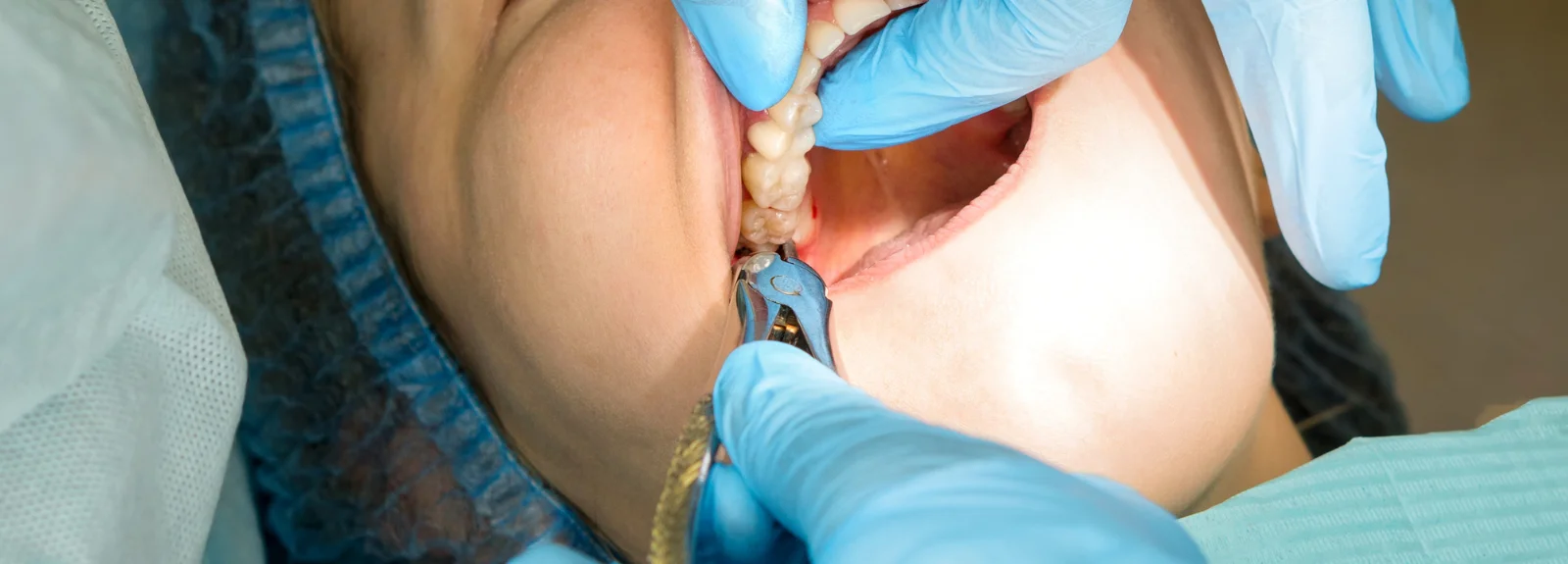
If your dentist has told you a tooth needs to come out, the uncertainty is often worse than the procedure itself. Most patients aren’t worried about the extraction as much as they’re worried about not knowing what’s about to happen. Here’s a clear walkthrough of the entire process, from your first consultation to what recovery actually looks like day by day.
Before the Procedure
Consultation and Imaging
Your dentist will examine the tooth and take detailed imaging, ideally a CBCT 3D scan rather than a standard X-ray, to assess the root structure, surrounding bone, and how close the tooth sits to nerves. This step matters more than patients usually realise: it’s what allows your dentist to plan a safer extraction and avoid complications like nerve involvement.
Medical History Review
Be upfront about any underlying health conditions, blood thinners, or smoking habits. These all affect how your dentist approaches the extraction and what precautions are taken.
Anaesthesia
Local anaesthesia numbs the area completely before anything begins. If you’re anxious about the procedure, ask about sedation options, most Motor City clinics, including ours, can accommodate this.
During the Procedure
There are two types of extractions, and which one applies to you depends entirely on the tooth’s position:
Simple extraction is used for teeth that are fully visible above the gumline. The dentist loosens the tooth with an instrument called an elevator, then removes it with forceps. This typically takes 15–30 minutes.
Surgical extraction is needed for broken teeth or impacted teeth (most commonly impacted wisdom teeth) that aren’t easily accessible. A small incision is made in the gum to reach the tooth, and in some cases the tooth is sectioned into pieces for easier removal.
What you’ll actually feel: pressure and a tugging sensation, not pain. The local anaesthetic blocks pain signals completely, patients are often surprised at how uneventful the procedure feels compared to what they expected.
After the Procedure: Hour by Hour
First 30–45 Minutes
Bite down firmly on the gauze pad provided by your dentist to allow a blood clot to form in the socket. This clot is critical, it protects the exposed bone and nerve endings underneath.
First 24 Hours
- Avoid rinsing, spitting forcefully, smoking, or drinking through a straw. Any of these can dislodge the clot and lead to dry socket, a painful complication that significantly delays healing.
- Some bleeding is normal during this window. If it continues past 24 hours or becomes heavy, contact your dentist.
- Apply an ice pack to your cheek in 15-minute intervals to manage swelling, which typically peaks around 48 hours before it starts improving.
- Stick to cool, soft foods, think yogurt, mashed potatoes, or lukewarm soup. Avoid hot foods and drinks in the first day.
Days 2–7
- You can gently brush your other teeth, but avoid the extraction site directly.
- After the first 24 hours, gentle warm saltwater rinses can help keep the area clean.
- Swelling and mild discomfort should steadily improve. If pain worsens rather than easing after day 2 or 3, this can be a sign of dry socket and is worth getting checked.
- Most patients return to a normal diet and desk-based routines within a few days to a week.
Avoid Smoking
Smoking should be avoided for at least 72 hours after extraction, ideally longer, since it’s one of the most common causes of dry socket.
What Happens If You Need a Replacement Tooth?
If the extracted tooth needs to be replaced, whether for chewing function, appearance, or to prevent surrounding teeth from shifting, some patients qualify for a same-day dental implant, meaning you don’t have to leave with a gap while waiting for a separate procedure. Whether you’re a candidate depends on bone density and healing at the extraction site, something your dentist can assess during your initial exam.
Tooth Extraction Cost in Motor City, Dubai
Pricing depends on several factors:
- Whether the extraction is simple or surgical
- Whether the tooth is impacted
- Number of teeth being removed
- Imaging required (standard X-ray vs CBCT scan)
- Whether sedation is needed
At Acer Dental Clinic, tooth extraction starts from AED 250, with an exact quote provided after your consultation and imaging.
Frequently Asked Questions
Is tooth extraction very painful? No. Local anaesthesia means you won’t feel pain during the procedure itself, only pressure and tugging. Any discomfort afterward is usually manageable with over-the-counter pain relief.
How long does recovery take? Most patients recover within a few days to a week, with swelling peaking around 48 hours and gradually improving from there.
How do I avoid dry socket? Avoid straws, smoking, spitting, and vigorous rinsing for at least 24 hours, ideally longer. These actions can dislodge the blood clot that protects the socket while it heals.
Can I eat normally after the procedure? Once the anaesthesia wears off, yes, but stick to soft, cool foods for the first 24–48 hours and avoid the extraction site while chewing.
Is nerve damage a risk? It’s a rare but possible risk, particularly with lower wisdom teeth close to the mandibular nerve. CBCT imaging before the procedure significantly reduces this risk by giving your surgeon a precise 3D view of the tooth’s position relative to nearby nerves.
Book Your Tooth Extraction Consultation in Motor City
At Acer Dental Clinic, extractions are performed by a specialist Maxillofacial and Oral Surgeon with over 20 years of experience, supported by CBCT imaging to plan every procedure safely. If you’re dealing with a damaged, impacted, or painful tooth, we’ll walk you through exactly what your case needs before any treatment begins.
Book your consultation today and get a clear treatment plan, not just a quote.
