

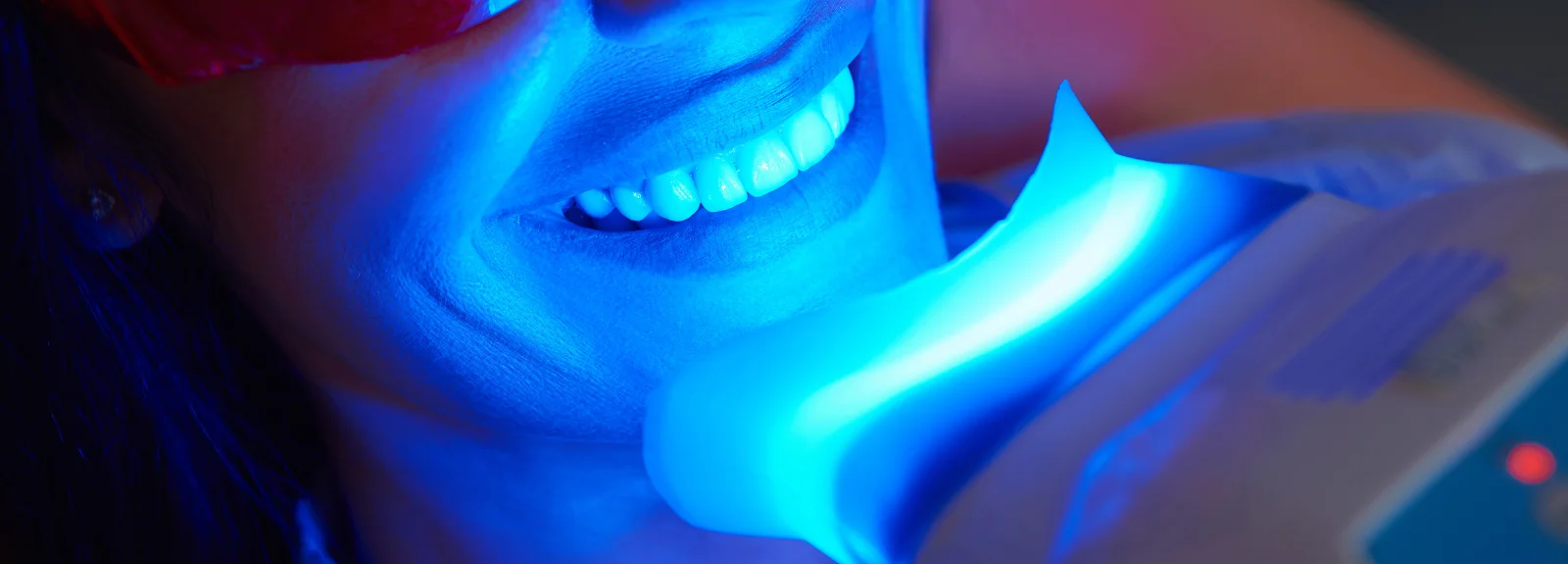
The honest answer is that they’re not really competing. In-clinic and at-home whitening do different jobs, and the best results usually come from using both one to make the change, the other to hold it.
| Zoom in-clinic | Custom take-home trays | Shop-bought kits | |
| Supervision | Dentist-administered | Dentist-prescribed | None |
| Gel strength | Highest | Moderate | Lowest |
| Timeframe | One appointment, about an hour | Two to three weeks of nightly wear | Weeks, variable |
| Gum protection | Barrier applied before treatment | Trays moulded to your teeth | One-size strips or trays |
| Best for | Fast, visible change before an event | Gradual whitening and maintenance | Mild surface staining |
Why In-Clinic Whitening Works Faster
The main variable is concentration. In-clinic gels are far stronger than anything sold over the counter, which is precisely why they can only be used under supervision.
That supervision does real work. A protective barrier is placed over the gums first, because high-concentration peroxide burns soft tissue on contact. Your dentist also checks that whitening is appropriate at all untreated decay or gum inflammation must be dealt with before bleaching, or you get pain rather than results.
The outcome is a visible change in one appointment rather than weeks. If you have a wedding or an event in the diary, that’s the practical difference.
Read more about Zoom whitening at our Motor City clinic.
Where At-Home Whitening Genuinely Wins
Custom take-home trays moulded to your teeth by a dentist and used with a prescribed gel are a legitimately good option, not a consolation prize.
They whiten gradually, which many people find causes less sensitivity, and they suit mild, even staining. Critically, they’re the best tool for maintenance: keeping your trays after in-clinic treatment lets you top up occasionally instead of paying for the full procedure again.
Shop-bought strips are the weakest of the three. Low peroxide concentrations produce modest change, and one-size trays leak gel onto gums and whiten unevenly at the edges. They help with light surface staining, not deeper discolouration.
Be cautious with unregulated kits bought online. Some contain peroxide concentrations not legal for unsupervised use, and some rely on acidic ingredients that lighten teeth by roughening enamel which you can’t reverse.
What Neither Option Can Fix
This is the part most whitening pages leave out, and it matters more than the Zoom-versus-trays question.
Whitening does not work on dental work. Crowns, veneers, bonding and composite fillings don’t respond to peroxide. Whiten natural teeth sitting alongside restorations and the restorations stay put, so the mismatch becomes obvious.
If you’re considering veneers or crowns as well, the sequence matters: whiten first, let the shade settle, then match the new restorations to it. Doing it the other way round means replacing work you’ve just paid for.
Some discolouration is internal. Staining from tetracycline, fluorosis, or a tooth that darkened after root canal treatment sits inside the tooth rather than on it. These respond poorly to standard whitening and need a different approach internal bleaching, or a restorative option.
What About Sensitivity?
Temporary sensitivity is the most common side effect of both methods short, sharp twinges that usually settle within a day or two. It reflects peroxide passing through enamel, not damage to it. Desensitising agents and spacing treatment both help, which is one reason supervised whitening tends to be more comfortable than guessing at home.
So Which Should You Choose?
Choose Zoom if you want a visible change quickly, have an event coming up, or have coffee, karak, tea or shisha staining that over-the-counter products haven’t shifted.
Choose custom trays if you’d rather whiten gradually, are sensitive, or want a maintenance option.
Choose both and most patients ultimately do. In-clinic treatment to make the change, trays to keep it. Whitening isn’t permanent, and results fade with the same habits that caused the staining.
Book a whitening consultation or call 800 22 32 33.
Frequently Asked Questions
Is Zoom whitening better than at-home whitening?
It’s faster and uses stronger gel under supervision, so the change is visible in one appointment. At-home trays whiten gradually and suit maintenance better. Most patients get the best result combining both.
How long does teeth whitening last?
It varies with diet and habits. Coffee, tea, red wine, smoking and shisha all shorten it. Occasional top-ups with custom trays extend results considerably.
Do whitening strips actually work?
Mildly, on surface staining. Peroxide concentrations are low and one-size strips whiten unevenly, especially around curved teeth. They won’t shift deeper discolouration.
Will whitening damage my enamel?
Supervised whitening at appropriate concentrations isn’t considered damaging to enamel. The risks come from unsupervised high-strength or acidic products, and from whitening over untreated decay or gum disease.
Can I whiten my veneers or crowns?
No. Restorations don’t respond to whitening gel. If you have visible dental work, discuss sequencing with your dentist before starting.
